
Online Booking Software for Service Businesses: The Real Point Isn't the Calendar
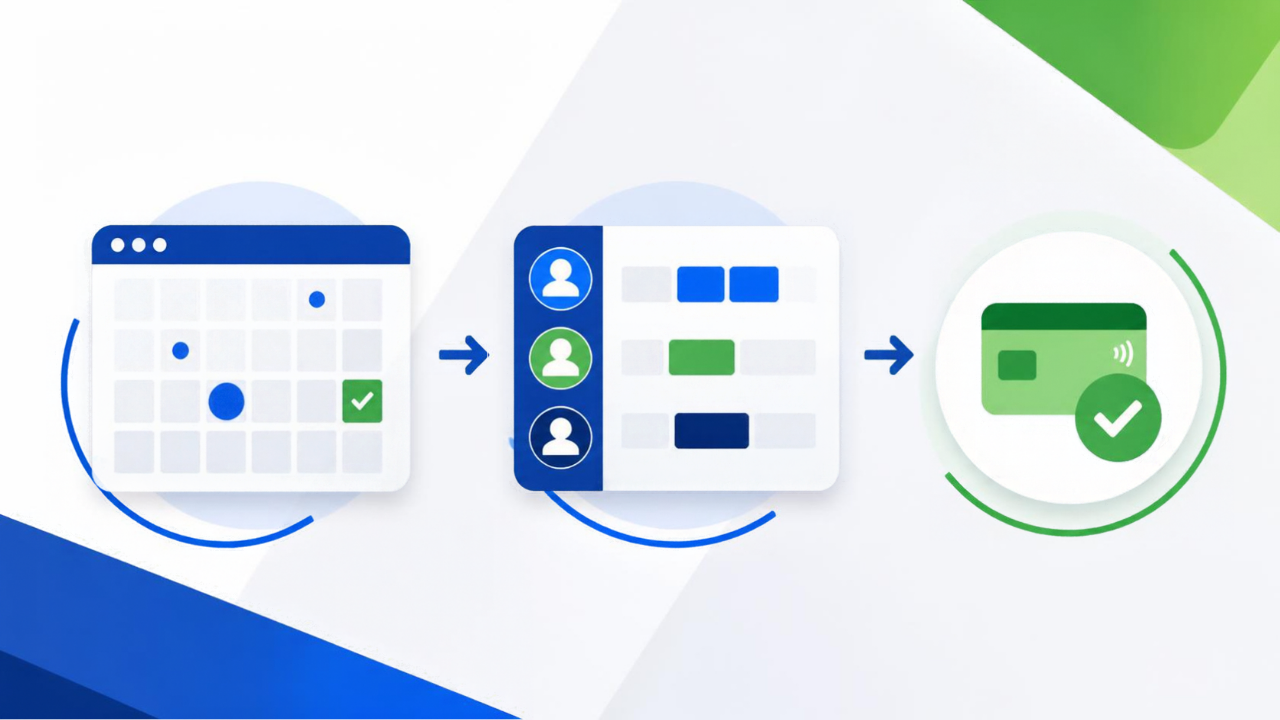
Online booking software for service businesses gets sold on the calendar, but the calendar was never the hard part. Anyone can put a "book now" button on a website. The hard part is what happens forty seconds after someone books: does that slot actually exist, does the right crew get assigned to it, and does the person on the way to the job know about it before they're standing at a customer's door with the wrong equipment.
The double-booking problem isn't a software bug, it's a data problem
Most double-bookings don't happen because the software is broken. They happen because the booking page and the crew's actual schedule are two different systems that don't talk to each other in real time. A customer books a 2pm slot online. The dispatcher, working off a whiteboard or a separate spreadsheet, has already put someone else in that slot from a phone call twenty minutes earlier. Nobody did anything wrong. The two records just never reconciled before the customer got a confirmation email.
This is why booking software that only manages the public-facing calendar — without touching dispatch, crew assignment, or job status — solves the visible half of the problem and leaves the expensive half untouched. You still find out about the conflict when a customer calls asking where the crew is.
What "booking" actually needs to include for a crew-based business
For a business where someone drives to the client — cleaning, inspection, landscaping, mobile repair — booking isn't just reserving time. It's reserving a person, a vehicle, and whatever equipment that job requires, at a location that has to fit into a route that day. A booking system built for salons or single-location appointments doesn't know any of that. It just knows the hour is taken.
The systems that actually prevent conflicts treat a booking as an assignment from the moment it's created, not a calendar entry that gets manually turned into an assignment later by a person checking a second screen. If a slot doesn't have an available crew member with the right skill set, the system shouldn't offer it as bookable in the first place — not offer it and let a human catch the conflict after the fact.
The on-site payment gap booking software usually ignores
Booking gets the customer in the door. It rarely gets you paid at the door. A lot of service businesses still run a job to completion, hand the customer a paper invoice or a verbal total, and then chase payment by text or email for the next two weeks — sometimes longer, sometimes never. The booking system and the payment step are treated as unrelated events even though they're the same transaction from the customer's point of view.
The businesses that collect fastest tie the two together: the booking record becomes the invoice record the moment the job is marked complete, and payment happens on-site through the same system, not as a follow-up task someone has to remember to do from the office later.
Seasonality makes the scheduling problem worse, not better
Landscapers know their spring is not their January. Cleaners know the week before a holiday looks nothing like the week after. Booking software that treats every week as equivalent will happily overbook a slow system into a busy season or leave capacity on the table during a slow one, because it has no concept of your actual crew capacity changing month to month. What matters is whether the system lets you adjust available capacity per crew, per week, without rebuilding your booking rules from scratch every time the season turns.
What to actually check before switching
Three questions cut through most of the marketing on this: does a booking check real crew availability at the moment it's made, not after? Does completing a job trigger payment collection instead of a separate invoicing step? And can you see every crew member's day in one view, not a chart per person that you have to mentally merge yourself? If a tool can't answer yes to all three, you're buying a calendar widget, not a scheduling system.
Switching costs are real for a crew that's used to a whiteboard or a simpler app — expect a rough first two weeks of double-entry while everyone adjusts. That cost is worth weighing against what a single missed or double-booked job actually costs you: a refund, an angry review, or a crew member driving forty-five minutes for nothing.
FocalVA ties booking, crew dispatch, and on-site payment into one system built for businesses that go to the client — so a booked slot is a checked slot, and a finished job is a paid job. If double-bookings and payment chasing are eating your week, see how FocalVA handles booking for service businesses.