
How to Stop Just Checking In Emails From Clients
How to stop just checking in emails from clients is a question every consultant eventually asks, usually around the fortieth time someone pings you for a status they could have looked up themselves, if there had been anywhere to look. The email itself is never really about the work. It's about the client not knowing where the work stands, and the only tool they have for finding out is you.
The email isn't the problem
It's tempting to treat "just checking in" as an annoyance to be managed, a canned reply, a polite deflection, a rule that status updates only go out on Fridays. Those tactics treat the symptom. The actual cause is that the client has no visibility into the engagement between the moments you choose to give it to them, so silence reads as "nothing is happening" even when plenty is happening. A consultant who's deep in research, a designer mid-revision, a bookkeeper reconciling a messy quarter, from the outside, all of that looks identical to doing nothing at all.
Clients don't send these emails because they're anxious by nature. They send them because the alternative to asking is not knowing, and not knowing about something they're paying for is worse than the minor awkwardness of asking. Every "just checking in" is a client doing the only thing available to them to close that gap.
Why a bigger status report doesn't fix it
The common fix is more communication: longer recaps, more frequent updates, a weekly summary email that takes an hour to write and gets skimmed in ninety seconds. That's more work for you and it still leaves a gap, because a status report is a snapshot from whenever you wrote it, not a live answer to whatever the client is wondering about right now. By the time the Friday recap lands, the question that prompted Tuesday's check-in email has usually already come and gone, unanswered.
There's also a trust cost to over-communicating on a schedule you set. It signals that updates are something you dispense on your terms, which is exactly the dynamic that makes a client feel like they have to ask permission to know what's going on with their own engagement. The fix isn't scheduling more updates. It's removing the need to ask for one.
What actually replaces the email
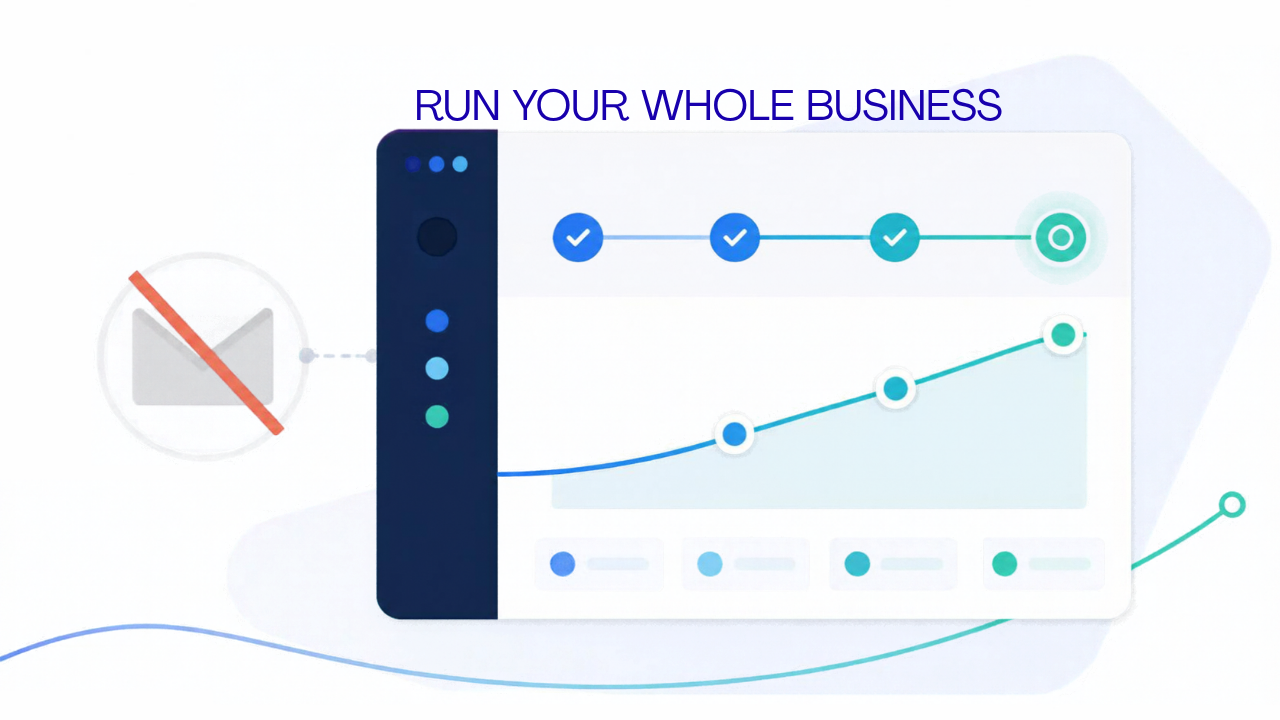
A client portal does the boring, unglamorous work of answering the question before it gets asked: what's the current phase, what was delivered last, what's the invoice status, when's the next milestone. None of that requires you to write anything new. It requires the information that already exists in your project and billing tools to be visible to the one person who most wants to see it, without a message, a login ticket, or a follow-up call.
This matters more than it sounds like it should, because most "just checking in" emails aren't actually asking a hard question. They're asking an easy one that happens to have no visible answer. Is the contract signed. Did the last invoice go through. Is the draft still on track for Thursday. A portal that surfaces contract status, invoice history, and project milestones in one place closes off the entire category of email that exists purely because there was nowhere else to check.
Where scope creep hides in the same gap
The same lack of visibility that generates check-in emails also hides scope creep until it's already a problem. A client who can't see how many hours an engagement has used, or how far along a fixed-fee project actually is, has no way to notice when "one small addition" is the fifth small addition this month. Give them a live view of hours or milestones against the original agreement, and scope conversations happen naturally, at the moment the extra ask comes in, instead of turning into a disputed invoice line three weeks later.
Contracts play into this too. A lot of scope disputes trace back to an engagement letter or SOW that was signed once and then never looked at again by either party. When the contract, the invoice, and the project status live in the same place a client can see, "that wasn't in the original scope" stops being an argument and starts being a fact either side can just look up.
The contract turnaround problem hides here too
A surprising share of check-in emails are really contract questions in disguise. "Just checking in" often means "did you get the SOW I sent back with a comment" or "is the amendment we discussed actually signed yet," because paper contracts and PDF-and-email signature chains have no visible status the client can check without asking you directly. A contract that's sitting in someone's inbox unsigned looks, from the client's side, exactly like a contract nobody has looked at.
A client who can see, in the same place as their invoices and project timeline, that the amendment was sent Tuesday and signed Wednesday has one less reason to email you asking. It also protects you on the other side of that same coin: a client who hasn't signed yet can see that clearly too, instead of assuming the ball is in your court when it's actually in theirs.
None of this is about hiding information or managing a client's perception of progress. It's the opposite: the more a client can see without asking, the less reason they have to wonder what isn't being shown to them. A consultant who resists giving clients visibility, usually out of habit rather than any real reason, tends to get more scrutiny over time, not less. Openness is what actually earns the benefit of the doubt during the weeks when the work is genuinely slow-going for reasons that have nothing to do with effort.
FocalVA gives clients their own portal view of contracts, invoices, hours, and project status, so the update they'd normally have to ask you for is just sitting there, current, whenever they want to check. If check-in emails have quietly become part of your job description, see how FocalVA works for consultants and creatives.